

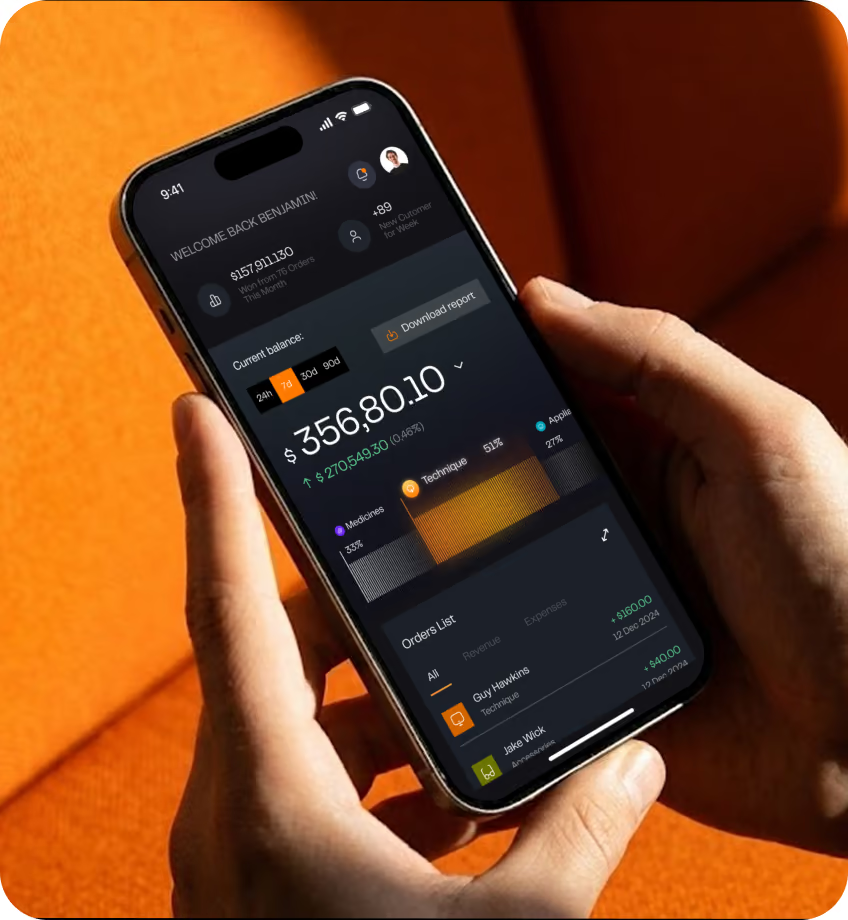
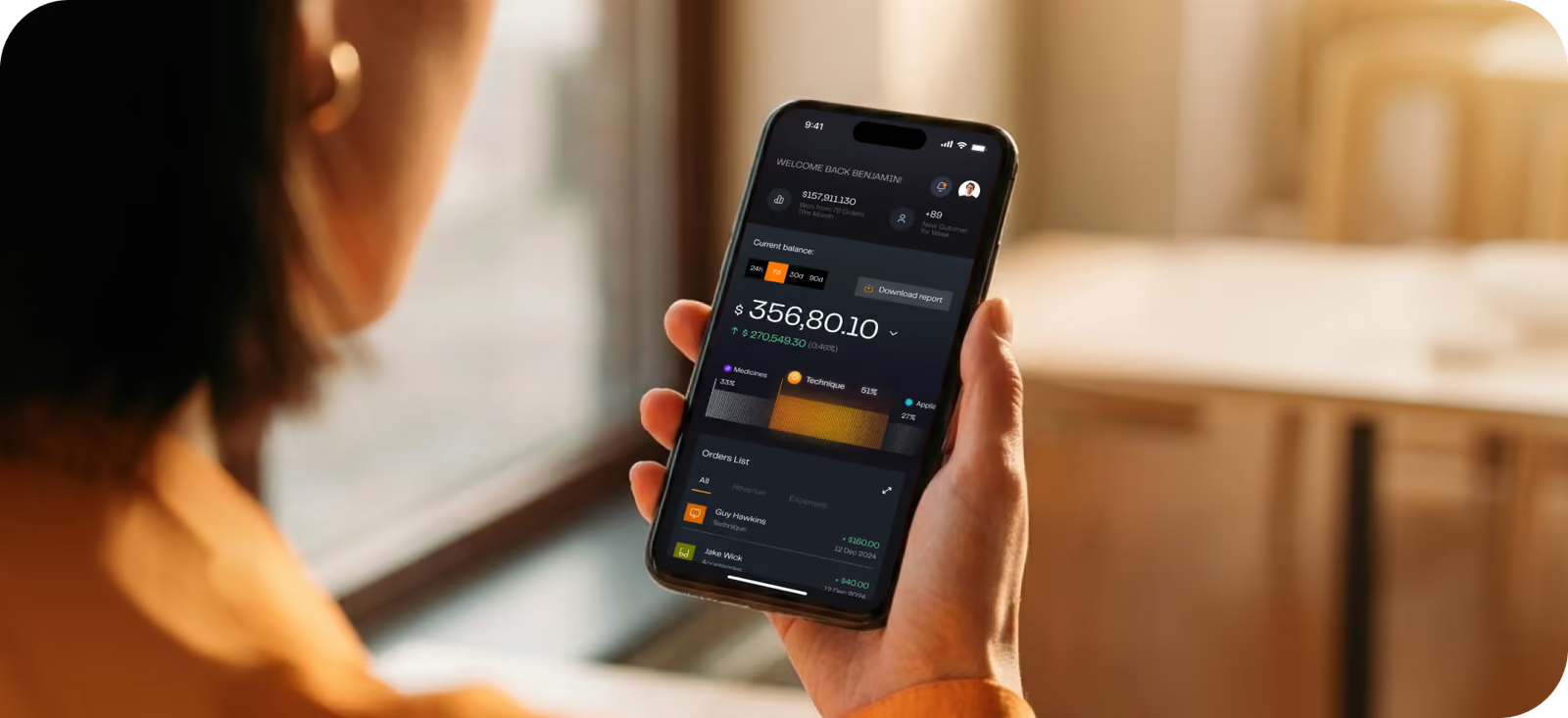
Kinves reached 92% transfer task success after a mobile redesign
- 92%
- Transfer success
- 18 s
- Avg. transfer
- −31%
- Nav errors
We design, build and grow high-performance websites, web platforms and mobile apps that work on every device.
Our global presence · USA · UAE
Why VDIGIT
Services
One team for the app, the website that sells it, and the cloud it runs on.
View all servicesMobile · Flutter
One codebase, two stores, one bug queue.
Web · Next.js
Fast sites and web apps your team can run.
Cloud, Data & AI
Infrastructure, insight and AI features that scale with you.
AI development
We add practical AI to the apps and platforms we build, and we use it in our own delivery, so we know what holds up in production.
AI development servicesChat assistants, smart search, recommendations and image recognition inside your Flutter or web app.
Automations that read documents, route requests and update the systems you already use.
Internal copilots trained on your own docs and data, with sources on every answer.
A short workshop to find where AI pays off, what it costs, and which ideas to skip.
Why Flutter
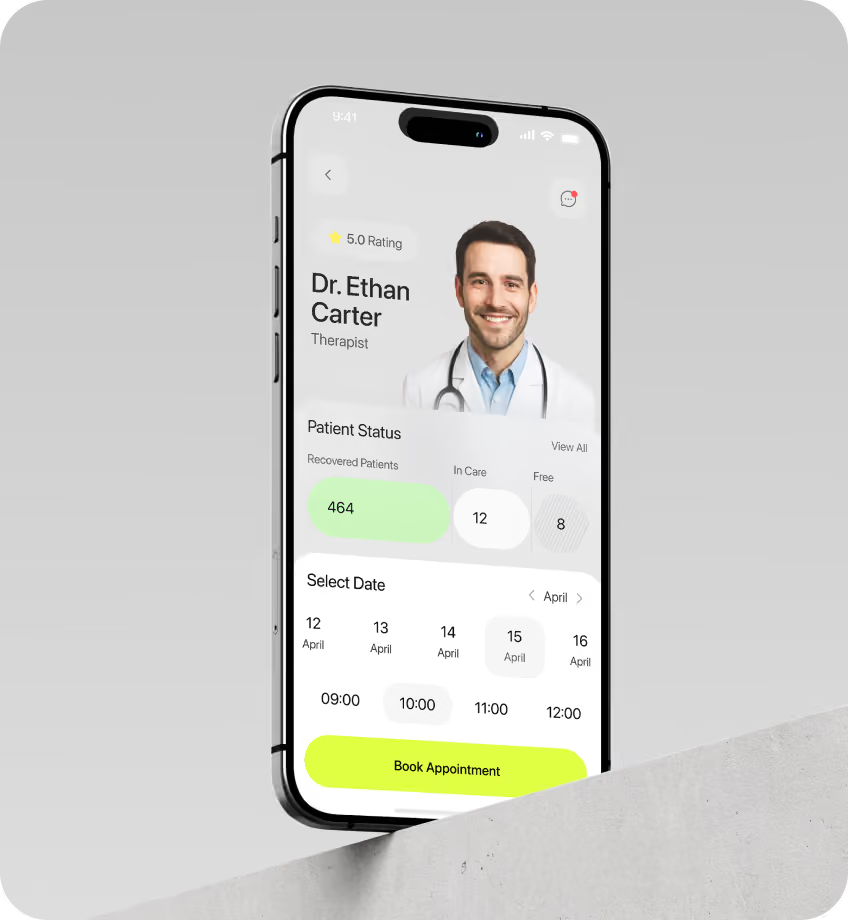
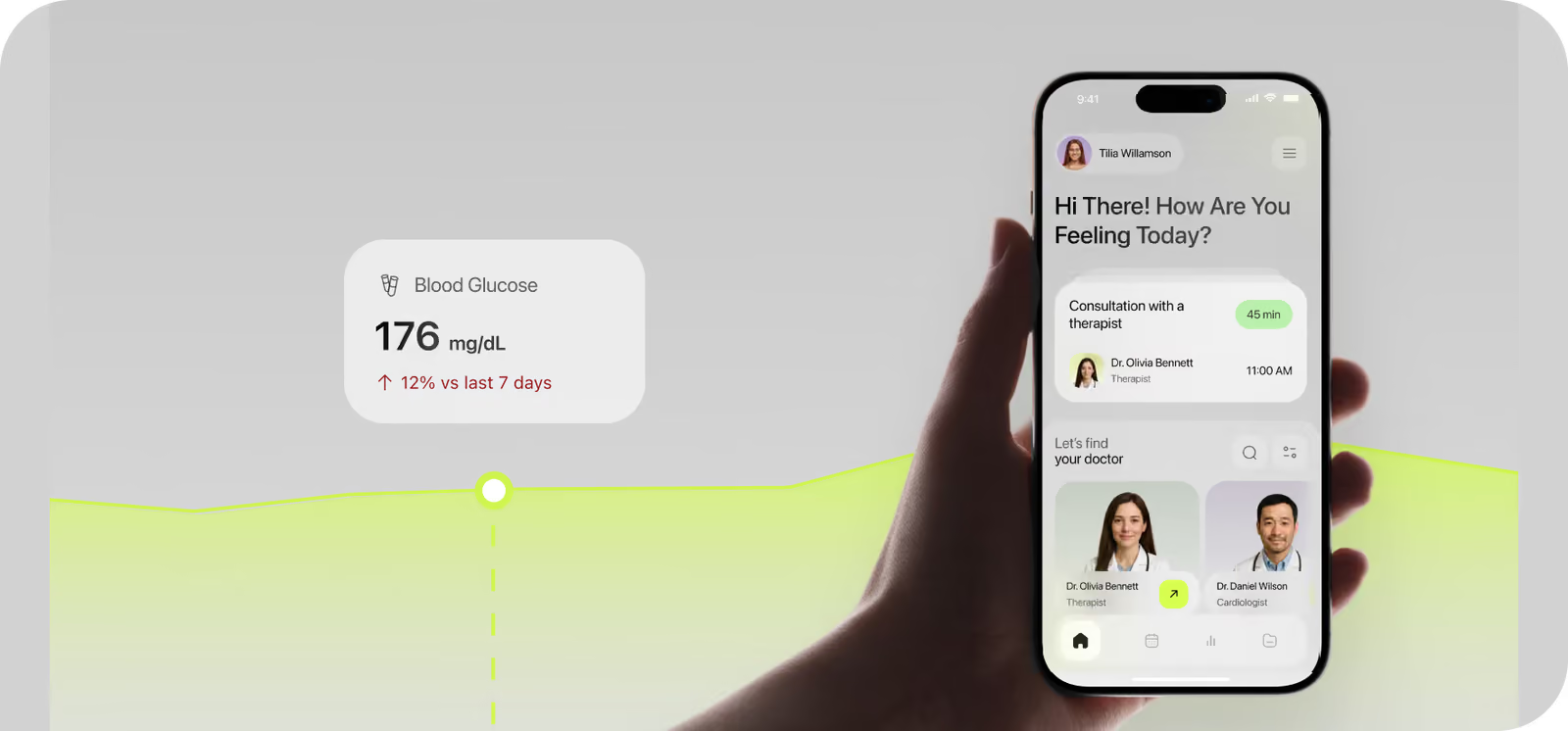
Flutter compiles one Dart codebase to native iOS and Android apps, the web and desktop. You fund one team, one roadmap and one set of bugs, not two or three.
One codebase, two stores, native performance.
Tablets and foldables without a second project.
Flutter web for app-like tools; Next.js for SEO marketing sites. We'll tell you which.
macOS and Windows builds from the same repository.
How we work
We run delivery in two-week sprints, so you see working software early and often rather than waiting for a single hand-off at the end. Every sprint closes with a demo, a build you can install, and a clear picture of what lands next.
Goals, users and must-haves turned into a fixed scope, estimate and roadmap.
A clickable prototype tested before a line of production code.
A demo and an installable build every sprint, in your repository.
Automated and real-device testing; App Store and Google Play submission handled.
Monitoring, OS and Flutter upgrades and new features, with a retained team or fixed days per month.
Step 01 starts with a free call.
Get a free estimateEngagement models & pricing
Transparent starting points. Your quote follows a 30‑minute call.
From $X
Discovery, UI/UX, a Flutter app for iOS & Android, QA and store release, at a fixed price.
Best for: New products and funded startups.
From $X/mo per engineer
Senior Flutter engineers plus a dedicated project lead. Scale up or down monthly.
Best for: Roadmaps, scale-ups and staff augmentation.
From $X
Fast marketing sites, portals and admin dashboards on Next.js, with a CMS your team can edit.
Best for: Marketing sites, portals and internal tools.
Before you get in touch
Still unsure? Talk to a human.
A 30-minute call with the people who would build it.
It depends on screens, integrations and back-end work; dedicated developers are billed monthly. After a 30-minute call we send a written, fixed-scope estimate with every assumption spelled out, so you can compare it line by line.
Weeks rather than months once discovery is done. We scope the first release into two-week sprints and write the assumptions down, so the timeline you sign off is the one we plan against. Larger products ship in phases, with a usable build at every step.
One Flutter codebase reaches iOS, Android, web and desktop, so you fund one team, one backlog and one QA cycle. Native still wins for heavy on-device compute, deep OS integration or AR-first products, and if that's you, we'll say so.
Both are cross-platform. We specialize in Flutter because it renders its own UI, so iOS, Android and web look and behave the same, and the same Dart code can target desktop. Already invested in React Native? We can audit it or plan a migration.
You do. We work in your repository from day one, or hand over full ownership with build configuration and release credentials at the end.
Yes: yours or ours, before we see anything confidential. Tick “Send me an NDA before we talk” in the form.
VDigit LLC is registered in St. Petersburg, Florida. Engineering and design teams work across the USA and MENA, with a named contact and an agreed daily overlap with US business hours.
OS and Flutter upgrades, performance work, monitoring and new features, either through a retained team or a fixed number of days per month.
Yes: React Native or legacy native migrations, Flutter code audits, and engineers embedded in your team.
First we read your brief, then we set up a 30-minute discovery call, and finally you get a fixed-scope estimate and timeline in writing.
Fixed price suits a clear first release: you know the scope, the cost and the date before we start. A monthly team suits a living roadmap, where priorities change every sprint. Many clients start fixed for the MVP and move to a team after launch.
We price the change before anyone builds it. You see the added cost and time in writing, approve it or swap it for something else, and the plan updates. No surprise invoices.
Fixed-scope projects are split into milestones tied to working builds you can install. Dedicated teams are billed monthly in advance, and you can scale up or down with a month's notice.
Nothing formal. A few lines on what you want to build, who it's for and any deadline is enough. If you have designs, a pitch deck or an existing app, send the link and we'll review it before we talk.
Yes. Flutter compiles to native ARM code and renders at 60–120 fps. Banking, retail and media apps used by millions run on it. Where a feature needs deep OS access, we use platform channels to call native Kotlin or Swift code.
Yes, for app-like tools such as dashboards, portals and admin panels. For SEO-driven marketing sites we recommend Next.js instead, and we'll tell you which fits on the first call.
Yes. We build cross-platform by default because it saves you a second team, but we write native Kotlin or Swift when a product needs heavy on-device processing, deep OS integration or AR.
Yes: store listings, screenshots, signing, review submissions and phased rollouts. If a review is rejected, we fix it and resubmit.
Mostly TypeScript with Next.js and React on the front end, Node.js or Python on the back end and PostgreSQL for data. We fit in with an existing stack when you already have one.
Yes. We start with a short code and architecture review, then fix the most painful issues first and add features in two-week sprints.
WordPress suits teams that publish often and want plugins. A headless CMS (Sanity, Strapi) suits fast, custom front ends and multiple channels. A custom CMS makes sense only when your content model is unusual. We'll recommend one after looking at who edits what.
Yes. We map every old URL to its new home with 301 redirects, keep titles and metadata, and monitor Search Console after launch.
AWS, Google Cloud and Azure. We set up infrastructure as code, so your environments are reproducible and you're never locked into our team.
Yes. A short audit covers pipelines, cloud costs, security and monitoring, and ends with a prioritised list of fixes you can act on with or without us.
Yes: Power BI, Looker Studio, Tableau or Metabase. If a dashboard needs to live inside your product, we build it with custom charts instead.
Product databases, CRMs, billing, ad platforms, spreadsheets and most SaaS tools with an API. We consolidate them into one warehouse your dashboards read from.
We use providers that don't train on your data, keep sensitive data in your cloud where needed, and run open models on your own infrastructure when privacy rules require it.
It depends on usage and model choice. We estimate running cost during the prototype, then use caching, smaller models and limits to keep the monthly bill predictable.
Redesign is a strategic approach to improving an existing digital product. Whether it's an iOS, Android or web app, the goal is to improve its look, user experience, functionality and overall performance, so the product is more competitive, easier to use and aligned with your business goals. It usually involves user feedback, optimised conversion paths, responsive layouts and accessibility, with testing and iteration throughout.
When the product looks outdated, users don't stay, a past redesign didn't land, conversions are low, competitors look and feel better, or engagement keeps dropping. A redesign refreshes the product and aligns it with what users and the market expect today.
It depends on the scope of changes, complexity, research, timeline, new features, platforms, QA and post-launch support. Tell us about your product and we'll come back with a written, fixed-scope estimate.
With the KPIs and user metrics that matter to your business: satisfaction, engagement, conversion, retention, usability and performance, customer feedback and adoption. We agree the targets before we start and track them after launch.
No. The redesigned app ships as an update to the same store listing, and accounts and data carry over, so users simply see a better product.
A Minimum Viable Product is a first version of a new product that lets you learn the most about your customers with the least effort: a minimal feature set that still satisfies early users and creates a feedback loop for what to build next.
Very. It validates the business idea without the cost of a full build, lets you test, learn and iterate on real feedback, and shows early adopters and investors what the product can do in the real market.
1. Define the problem and the target audience. 2. Pick the core features that solve it. 3. Prototype and test the flows. 4. Build the essentials in Flutter for iOS, Android and the web. 5. Release to early users and collect feedback for the next iteration.
It's the most cost-effective way to check market fit before full development. It lowers the risk of building the wrong thing and helps you show investors real traction.
Team extension means adding external specialists to your existing team for as long as you need them. You get the skills quickly, move faster and avoid the overhead of hiring, while your core team stays focused on what it does best.
Specialist expertise on demand, flexible capacity, faster timelines and less risk, without long hiring cycles or administrative burden.
Define the roles and model you need, shortlist partners with relevant work and references, check communication, culture fit and transparency, and review contracts for data security and IP ownership. Then agree clear reporting and review the partnership regularly.
It depends on the product type, number of screens, integrations and compliance scope. After a discovery call we send a written, fixed-scope estimate with every assumption spelled out.
A focused MVP with onboarding, KYC and a core dashboard typically takes 8–12 weeks to design and build. A full product with multiple roles, compliance flows and a design system takes longer; we scope an exact timeline after the discovery call.
Regular UX solves for usability and conversion. Fintech adds compliance, trust and complexity: sensitive data, multi-step verification and dense financial information, all without losing the user at any step. Every screen has to work for the user, the legal team and the engineers.
Yes. We audit every screen, state and edge case first, then redesign high-risk flows like KYC, payment confirmation and admin panels separately, prototype and validate them before they connect to the rest of the product.
Yes. Compliance requirements are mapped in discovery: KYC flows with the fewest required steps, AML signals surfaced for compliance teams, and PSD2 strong authentication and consent screens that stay usable for non-technical users.
Real user data never appears in design files; we use synthetic data. We sign NDAs, scope access to the project team, and build masking, truncation and progressive disclosure into every sensitive component.
Discovery (stakeholder interviews, workflow research, compliance scoping), design (information architecture, flows, prototypes, UI on a design system), testing with patients, clinicians or admins, and development with EHR, FHIR/HL7 or payment integrations.
We map where protected health information enters, moves and leaves the product, and design with encryption, role-based access, secure authentication, audit logging and session timeouts. Accessibility follows WCAG 2.2 AA from wireframes onward and is tested with assistive technologies.
A focused marketing site takes 8–10 weeks; a patient portal or app with logins, scheduling and PHI typically 12–16 weeks or more. We scope the timeline after discovery and plan around approval cycles.
Yes. We keep URLs where possible, redirect the rest, preserve titles, metadata and structured data on traffic pages, and keep the trust signals Google weighs for health content.
Yes. We research each audience separately: patients need clarity and reassurance, clinicians need speed and dense information, admins need bulk tools and reporting. A shared design system keeps it consistent.
Yes. We build offline-first: jobs, routes and proof of delivery are stored on the device and sync automatically when the connection returns.
Yes. We connect to existing systems through their APIs or build middleware where needed, so orders, locations and statuses flow without manual re-entry.
We design the location pipeline for your fleet size, batch and throttle updates sensibly, and monitor latency, so the map stays accurate without draining batteries.
Both. We build headless storefronts on Shopify or another commerce platform, or a custom backend when your catalogue, pricing or marketplace rules need it.
A fast mobile website wins new customers; an app keeps loyal ones with push, saved carts and loyalty. Many retailers start web-first and add an app once repeat customers justify it. We'll recommend one after looking at your numbers.
Next.js storefronts with server rendering, optimised images and edge caching, measured against Core Web Vitals before launch.
Usually three: a customer app, a provider app and a web admin panel. We build the mobile apps from one Flutter codebase to keep cost and maintenance down.
We integrate a payment provider such as Stripe Connect for in-app payments, tips, split payouts and invoices, with the compliance checks providers need.
We design onboarding for both sides, build the core booking-to-payout loop first, and launch in one area or category so supply and demand grow together.
We design to WCAG 2.2 AA from the first wireframe, write in plain language, and test with screen readers, keyboard-only users and real residents before launch.
Role-based access, audit logging, encryption in transit and at rest, and collecting only the data a service needs, documented for your security review.
Yes. We provide the documentation your procurement and security reviews require and fit our delivery to your governance milestones.
Get started
Tell us what you're building. We'll come back with questions and a clear, fixed-scope estimate.
Tell us about your project
A few details are enough. We'll take it from there.